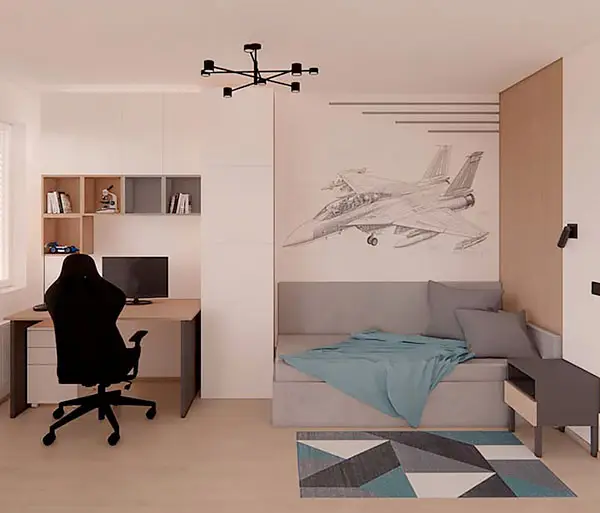
How to furnish a children’s room that “grows” with the child

Practical tips for a flexible design
Zoning the space
A residential architect advises: Zoning plays a key role in a children’s room. It is important to divide the room into different functional parts, such as places for sleeping, playing and learning. Each of these parts should be designed so it can easily be adjusted over time to the child’s growing needs. For example, a play corner can gradually turn into a work zone when the child starts school. As the child grows, the furniture can change too – toy storage can be replaced by a roomier wardrobe and the cot by a bigger bed that will suit the child into adolescence.
Functional furniture
- A well-thought-out bed: choose a bed that can adapt to a growing child, for example an extendable bed or a bed with storage to optimise space.
- A work surface: create a corner for study or creative activities with a desk and a comfortable chair. It will let the child develop their skills.
Creative and educational elements
- A drawing wall: if space allows, add a wall for drawing or a blackboard. It supports creative thinking and lets the child express their creativity.
- A bookcase: create an accessible bookcase with age-appropriate books. It supports a love of reading and the development of reading skills.
Flexible storage
- Modular storage units: use cabinets and shelves that can easily be adapted to changing needs. Modular systems allow flexibility in organising the space.
- Labelled storage: help your child keep the room tidy by labelling storage for toys, books and clothes. It supports responsibility and organisation.
Safety first
- Safe furniture: make sure all furniture meets safety standards and has no sharp edges. Protect the child from possible injuries.
- Electrical safety: position sockets and cables out of the child’s reach. Use safety sockets.
A changeable look
- A neutral base with accents: choose neutral colours for walls and furniture that can easily be updated with colourful, themed accents according to the child’s preferences.
- Interchangeable decorative elements: use decorations such as cushions, rugs and pictures that can easily be updated to the child’s taste and interests.
Designing a children’s room is a challenge, but adapting the space to the needs of a growing child can create an inspiring and functional environment that supports their development and well-being.
Text: Svetlana Golounina