Why choose a residential architect? How it differs from designs by studios and furniture stores

1. An individual approach and an overall concept
A residential architect looks at the space as a whole and designs the interior to meet not only aesthetic requirements but also the client’s lifestyle and needs. Before starting the design, they take time to get to know the family’s taste, preferences and lifestyle so the interior suits them as closely as possible.
2. Independence from products
Bathroom and kitchen studios or furniture stores often have a limited range of products. Their design is therefore tied to their current offer. A residential architect, on the other hand, is independent and can choose from different suppliers, materials and products according to the client’s specific requirements.
3. Originality and unique design
Unlike catalogue solutions, which studios or furniture stores often offer, a residential architect tries to create an interior you won’t find anywhere else.
4. Emphasis on functionality
A residential architect considers not only the design but also the functionality of the space. They study how you use the space and propose solutions that are practical and sustainable in the long term. Studios and furniture stores focus on functionality rather in relation to the products they offer, not the whole space.
5. Solving spatial limitations
Every space has its specific limitations – irregular shapes, lack of space or limited access to light. A residential architect can solve these challenges creatively and come up with a solution that the offer of a studio or store alone might not allow. They start with the layout and don’t hesitate to move partitions or doors if it better meets the client’s requirements. The client usually receives several layout options, which the architect discusses with them, including their pros and cons, so that together they choose the most suitable one.
6. Coordinating the implementation
A residential architect often offers a complete service that includes not only the design but also supervision of the implementation. This ensures that the final result matches the original plan and the client’s dream becomes reality.
7. Decorative elements and lighting
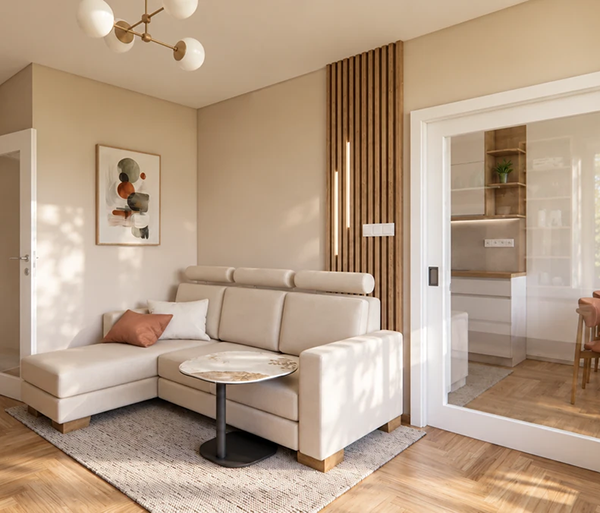
Unlike furniture stores, a residential architect also deals with wall finishes such as paints, wallpapers, slats, panels or decorative plaster. In addition, they create different lighting scenes that help create a pleasant atmosphere while meeting functional requirements.
Conclusion
An interior design by a residential architect is an investment in quality, individuality and functionality. Unlike studios and furniture stores, it offers not just products but complete, harmonious solutions that reflect your wishes and needs. If you are looking for an original, well-thought-out interior that is not only beautiful but also perfectly functional, a residential architect is the right choice. Their approach ensures every detail meets your expectations and the result is a space where you will truly feel at home.