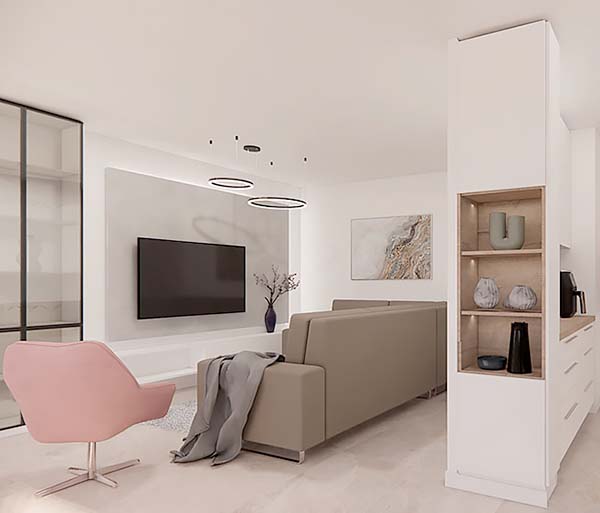
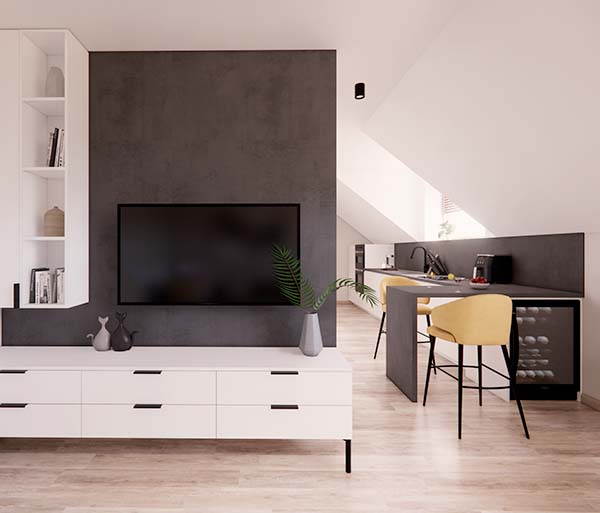
How to connect a living room with a kitchen? Avoid these 10 mistakes!

1. Mismatched colours and materials
The space should feel harmonious, so it is important to unify the colours and materials in both parts. A combination of mismatched wood decors, metal elements or overly contrasting colours can look chaotic. Ideally, stick to one palette and consistent materials – for example, the same wood decor on the kitchen units and the living room furniture.
2. Zones not defined clearly enough
An open space doesn’t mean that both parts should merge without clear boundaries. Without a natural division, the space can look disorganised. You can separate the zones with a rug, different floor materials or a kitchen island.
3. Mismatched lighting
A common mistake is using different light temperatures in the kitchen and the living room. Cold white light in the kitchen and warm yellow light in the living room can create an unpleasant contrast. Ideally, match both the colour and the intensity of the lighting, for example warm white light in both parts.
4. Furniture out of proportion with the space
Furniture that is too large can overwhelm the room, while furniture that is too small creates a feeling of emptiness. It is important to lay out the pieces so the space is balanced. Multi-functional pieces are a good choice, for example an extendable dining table or a sofa with storage.
5. The wrong floor
The transition between the kitchen and the living area should be visually pleasant. Using completely different materials, for example cold tiles in the kitchen and dark wood in the living room, can divide the space visually in an unfortunate way. A better option is to match the floor coverings or use similar tones.
6. Poor acoustics
An open space carries sound more than separate rooms. Without sound-absorbing elements, the space can be unpleasantly noisy. Curtains, upholstered furniture, rugs or acoustic panels can help.
7. Mismatched furniture styles
Mixing different styles without a clear connection can create an incoherent impression. If the kitchen is industrial and the living room minimalist, it is good to connect them with unifying elements, such as the same metal accessories or textile colours.
8. A disjointed wall colour scheme
If the wall colours in the kitchen and the living room are completely different, it can divide the space visually. A smooth transition can be achieved with tone-on-tone shades or the same colour on all walls.
9. Noisy appliances
Cooker hoods, dishwashers and fridges can be a source of noise that disturbs the peace of the living area. It pays to choose low-noise appliances and place them so that they disturb as little as possible.
10. Insufficient ventilation
Cooking creates steam and smells that can linger in the whole space. A good cooker hood, regular airing or heat-recovery ventilation will ensure a more pleasant environment and prevent grease from settling.
By avoiding these mistakes you will get a space that is not only aesthetically coordinated but also functional and pleasant to live in.